Facial Volume Loss

Facial Volume Loss

Facial volume loss is a common aesthetic concern that can create a hollow, sunken, or aged appearance as the natural fullness of the face gradually diminishes over time. This occurs due to the loss of collagen, elastin, and underlying fat pads, as well as changes in bone structure, all of which contribute to reduced support and contour in the face. It can be influenced by ageing, genetics, weight loss, and lifestyle factors. As a result, areas such as the cheeks, temples, jawline, and under-eyes may appear flatter, less defined, or more hollow, often contributing to a tired or less youthful overall appearance.

This concern is commonly associated with terms such as facial volume loss, hollow cheeks, sunken face, loss of facial fullness, midface volume loss, and age-related volume depletion.

Recommended Treatments

GET AN APPOINTMENT

Don’t wait—experience expert care! Book your consultation today.

FAQ

Frequently asked questions

What is Ultherapy and how does it help with facial lifting and volume loss?
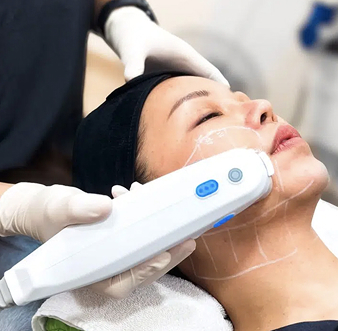
Ultherapy is a non-surgical facelift treatment that uses focused ultrasound energy to stimulate collagen production deep within the skin. It helps improve skin laxity, lift sagging areas, and restore structure, making it effective for facial lifting without surgery and improving the appearance of age-related volume loss.
Does Ultherapy restore facial volume?
Ultherapy is designed to lift and tighten skin by stimulating your body’s natural collagen and elastin production with focused ultrasound energy. It does not add facial volume the way dermal fillers or fat transfer do. However, improved skin firmness can create a subtly fuller, more refreshed appearance in some areas.
Is Ultherapy a good alternative to fillers or a facelift?
Ultherapy can be a good non-surgical option for people with mild to moderate skin laxity who want gradual lifting and tightening without surgery or injectables. It is often chosen instead of a facelift when someone wants less downtime and more natural-looking improvement. Compared with fillers, Ultherapy treats sagging and skin support rather than replacing lost volume. For advanced sagging or significant volume loss, fillers, facelift surgery, or a combination approach may provide better results.
How long do Ultherapy lifting results last?
Ultherapy results usually appear gradually over 2 to 3 months as new collagen forms, with continued improvement possible for several months. Many patients enjoy results for around 12 months or longer, depending on age, skin quality, and lifestyle factors. Maintenance treatments can help prolong the lifting effect.
Which areas can Ultherapy treat for lifting?
Ultherapy is commonly used to lift and tighten the brow area, under the chin, jawline, neck, and upper chest (décolletage). Some providers also treat selected facial areas to improve mild sagging and contour. Treatment suitability depends on your anatomy and goals.