
Carbon Laser Facial Before and After: Everything You Need to Know
- primeaesthetics
Introduction
If you’re curious about the carbon laser facial, especially the results people see before and after treatment, you’ve come to the right place. This popular skincare procedure offers impressive skin rejuvenation benefits, but to fully understand what to expect, it’s important to dive deep into how it works, who it suits, potential risks, and how to maintain your results. This comprehensive guide will walk you through everything — the science, the process, outcomes, and tips for optimal care.
What Is a Carbon Laser Facial and How Does It Work?
The carbon laser facial, often called the “Hollywood peel” or “carbon peel,” combines a carbon-based lotion with advanced laser technology to exfoliate and refresh your skin. The treatment uses a laser beam to interact with the carbon particles applied on your face. The carbon absorbs the laser energy, which in turn removes dead skin cells, excess oil, impurities, and bacteria without damaging the underlying skin. This selective photothermal interaction helps stimulate collagen production, tighten pores, and improve skin texture and tone.
Scientifically, the laser emits a specific wavelength of light targeting the carbon particles. The light energy causes rapid heating of the carbon, vaporizing it along with any surface contaminants. This process also lightly heats the dermis, triggering fibroblasts to produce new collagen — a key structural protein responsible for skin firmness and elasticity.
Unlike traditional abrasive peels, this treatment is non-invasive, painless, and has minimal downtime, making it suitable for many skin types. The laser settings can be adjusted to treat a range of skin concerns, from acne and pigmentation to dullness and fine lines.
How Does the Carbon Laser Facial Differ From Other Laser Treatments?
There are various laser skin treatments available, each with different mechanisms and purposes. The carbon laser facial stands out because it uses a topical carbon suspension as a photosensitizer, enhancing the laser’s ability to remove surface debris and improve skin clarity without deep tissue damage.
In contrast, fractional lasers like CO2 or erbium lasers penetrate deeper into the dermis to resurface skin by creating micro-injuries that promote collagen remodeling. These deeper lasers can be more aggressive, requiring longer healing times but offering significant improvement for wrinkles and scars.
IPL (intense pulsed light) targets pigment and redness by emitting broad-spectrum light, whereas carbon laser treatment is more focused on exfoliation and pore cleansing with simultaneous skin tightening.
Compared to chemical peels, carbon laser facials don’t rely on acids and cause less irritation or peeling. This makes carbon laser ideal for sensitive skin types or those seeking gentle rejuvenation without downtime.
What to Expect During a Carbon Laser Facial Session?
Your session usually starts with a thorough cleansing of the face to remove surface oils. Then, a thin layer of carbon lotion is applied evenly across your skin. You’ll be asked to wait a few minutes while the carbon penetrates your pores.
Next, the specialist uses a laser handpiece to scan your face. You may feel a mild warming or tingling sensation as the laser interacts with the carbon. The procedure lasts approximately 30-45 minutes.
After the laser passes, the carbon and dead skin cells are removed, revealing a brighter complexion. Many clients notice immediate radiance and a tightened feel.
Because the treatment is gentle, there’s no significant redness or peeling. Some mild warmth or flushing may occur but typically subsides within hours.
Carbon Laser Facial Before and After Results: What Changes to Expect
Results can vary based on skin type and concerns, but typically you’ll notice:
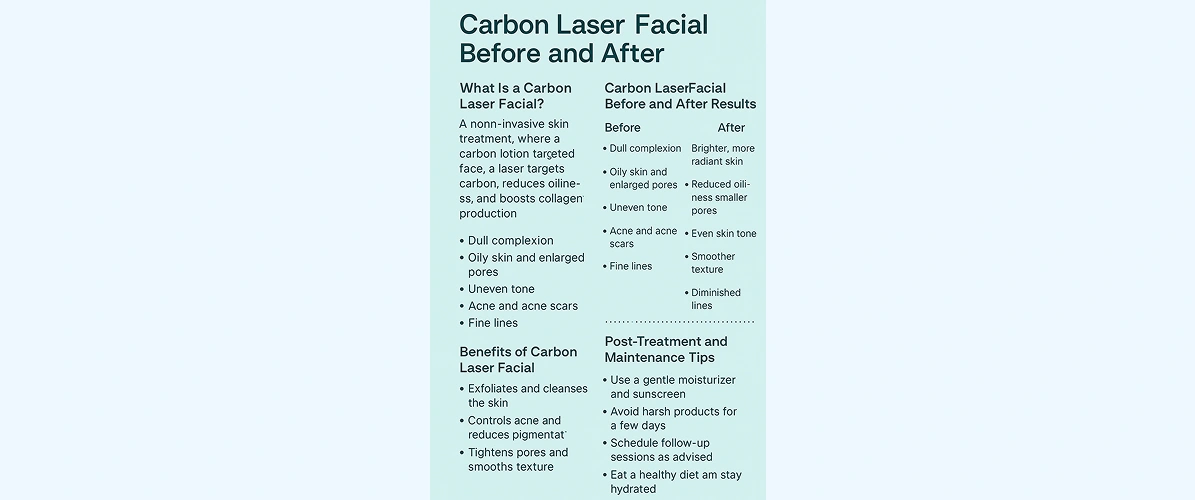
- Before: Skin may appear dull, oily, with visible blackheads, enlarged pores, uneven tone, acne scars, or fine lines.
- After: Skin looks visibly smoother, with reduced pore size, less oiliness, improved clarity, and a radiant glow. Acne scars soften, and fine lines appear less pronounced.
Because the treatment is gentle, there’s no significant redness or peeling. Some mild warmth or flushing may occur but typically subsides within hours.
In clinical studies, carbon laser facials have reduced acne lesions by over 60% and improved pigmentation scores by 40-50%. Real-world patient photos show significant before-and-after transformations, especially in acne-prone and oily skin types.
Which Skin Types Benefit Most from Carbon Laser Facials?
This treatment suits a wide range of skin types, from normal and oily to combination skin. It is especially beneficial for:
- Oily and acne-prone skin: The carbon absorbs excess sebum and kills acne-causing bacteria.
- Dull, uneven skin tone: It exfoliates dead skin and reduces pigmentation.
- Large pores: The laser tightens and shrinks pores for a refined look.
- Mild pigmentation or sun damage: Repeated treatments improve discoloration.
- Aging skin with fine lines: Collagen stimulation helps reduce wrinkles.
However, caution is needed for very sensitive or rosacea-prone skin, as the laser heat may trigger irritation in rare cases.
Who Should Avoid Carbon Laser Facial? Contraindications and Precautions
Despite its safety, carbon laser facial is not suitable for everyone. Key contraindications include:
- Active skin infections or open wounds on the face.
- Recent use of isotretinoin (Accutane) within the last 6 months.
- Pregnancy or breastfeeding, due to unknown safety profile.
- History of keloid scarring or poor wound healing.
- Photosensitivity or light-triggered conditions, like lupus.
- Skin cancer or precancerous lesions in the treatment area.
- Recent use of chemical peels or other laser treatments (within 2 weeks).
A qualified provider will conduct a detailed skin assessment and medical history review to identify any risks before proceeding.
Potential Risks and Rare Side Effects
The carbon laser facial is generally very safe, but potential side effects may include:
- Temporary redness or flushing lasting hours to a day.
- Mild dryness or peeling in some sensitive individuals.
- Rarely, post-inflammatory hyperpigmentation in darker skin tones.
- Temporary sensitivity to sun exposure after treatment.
- In very rare cases, mild burning or blistering if laser settings are too high.
Proper pre-treatment skin preparation and post-care minimize risks. Avoiding direct sun exposure and using high-SPF sunscreen are essential after sessions.
Scientific Explanation of Laser Technology in Carbon Laser Facial
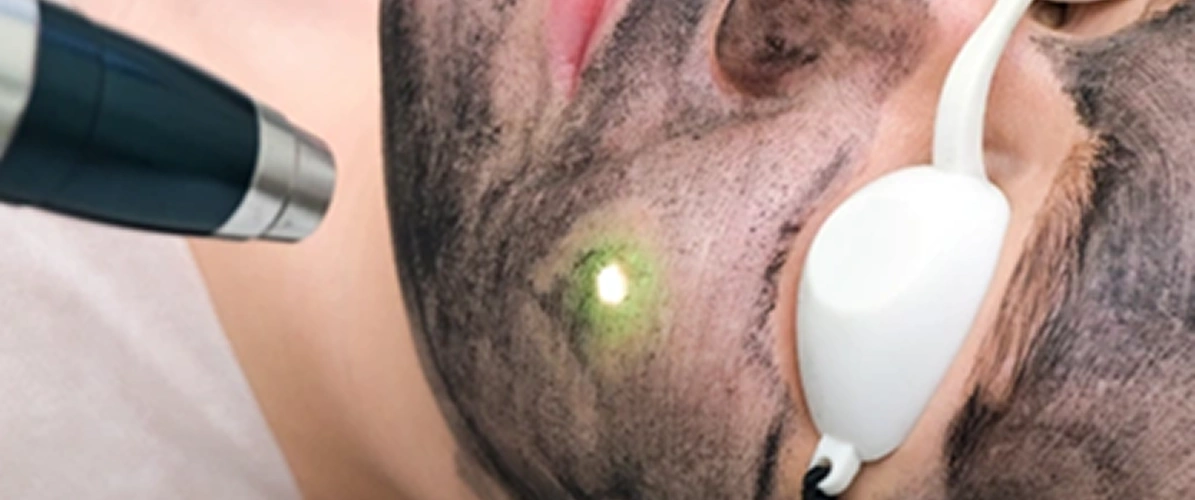
The carbon laser facial uses a Q-switched Nd:YAG laser emitting light typically at 1064 nm wavelength. This wavelength penetrates the skin selectively and is absorbed by the carbon lotion particles.
The carbon laser facial uses a Q-switched Nd:YAG laser emitting light typically at 1064 nm wavelength. This wavelength penetrates the skin selectively and is absorbed by the carbon lotion particles.
This dual action — mechanical exfoliation plus dermal collagen stimulation — explains the treatment’s ability to improve both surface skin texture and deeper skin firmness.
Post-Treatment Skin Care and Aftercare for Best Results
Proper aftercare is critical for maintaining and enhancing your carbon laser facial results. After the procedure, your skin barrier is temporarily more permeable and sensitive.
Immediately after, apply a gentle, fragrance-free moisturizer to soothe skin. Hydrating serums with ingredients like hyaluronic acid help maintain moisture.
Sun protection is paramount. Use broad-spectrum sunscreen with at least SPF 30 daily, reapplying regularly, to prevent pigmentation and protect healing skin.
Avoid harsh scrubs, retinoids, or chemical peels for at least 5 days post-treatment.
Incorporate antioxidant-rich products (vitamin C serums) to support collagen production and protect skin from environmental damage.
How to Identify a Qualified Provider for Carbon Laser Facial
To ensure safety and optimal outcomes, choose a certified, experienced skincare professional. Look for:
- Medical qualifications (dermatologist or licensed aesthetician under physician supervision).
- Experience specifically with carbon laser treatments.
- Access to FDA-approved laser equipment.
- Positive patient reviews and before-and-after galleries.
- Detailed consultation process including skin analysis and medical history.
- Transparent pricing and aftercare support.
Never opt for unlicensed providers or inexperienced operators, as improper use can lead to burns or ineffective treatment.
Comparing Carbon Laser Facial to Other Popular Facial Treatments
The carbon laser facial offers unique benefits but understanding how it compares helps you make informed choices.
|
Treatment Type
|
Procedure
|
Downtime
|
Ideal For
|
Main Benefits
|
Main Benefits
|
|---|---|---|---|---|---|
|
Carbon Laser Facial
|
Carbon lotion + Q-switched laser
|
Minimal
|
Acne, oily, pigmentation, pores
|
Exfoliation, collagen boost, glow
|
£80 – £150
|
|
Chemical Peel
|
Acid solution application
|
Few days
|
Pigmentation, wrinkles
|
Surface exfoliation, texture smoothing
|
£70 – £200
|
|
Fractional CO2 Laser
|
Ablative laser resurfacing
|
1-2 weeks
|
Scars, deep wrinkles
|
Deep skin renewal, scar improvement
|
£300 – £800
|
|
IPL (Intense Pulsed Light)
|
Broad spectrum light therapy
|
Minimal
|
Redness, pigmentation
|
Vascular lesion reduction, tone even
|
£100 – £250
|
|
Microdermabrasion
|
Mechanical exfoliation
|
None
|
Dull skin, minor scars
|
Surface smoothing, mild brightening
|
£50 – £100
|
Carbon laser facial strikes a balance — less downtime than aggressive lasers but more effective exfoliation and rejuvenation than simpler facials.
Effect of Carbon Laser Facial on Different Skin Types and Tones
Skin type and tone influence how your skin reacts to carbon laser facial:
- Fair to medium skin: Typically show excellent results with minimal risk of pigmentation changes.
- Darker skin tones: Effective but require cautious laser settings to avoid post-inflammatory hyperpigmentation. A skilled provider will adjust parameters accordingly.
- Sensitive skin: Generally safe but mild redness or irritation may occur.
- Acne-prone/oily skin: Repeated treatments improve discoloration.
- Aging skin with fine lines: Excellent for reducing oiliness and acne-causing bacteria
Personalized assessment ensures treatment plans fit your unique skin characteristics.
Summary and Final Thoughts
The carbon laser facial is a cutting-edge, versatile skin treatment offering multiple benefits — from deep pore cleansing and acne reduction to collagen stimulation and skin brightening. The procedure is safe, minimally invasive, and suitable for many skin types when performed by a qualified provider.
While visible results often appear immediately after treatment, a series of sessions is recommended for lasting improvements. Proper pre- and post-care, including sun protection and skincare product use, maximizes benefits and minimizes risks.
If you’re considering a carbon laser facial, consult with a licensed skincare professional to assess your suitability and tailor the treatment to your needs.
If you’re ready to improve your carbon laser facial Treatment, our expert team is here to help.
Contact us today to book your consultation and take the first step toward clearer, smoother, and more radiant skin.