
How to Get Rid of Fungal Acne on Forehead: Causes, Fixes & Skincare Tips
- primeaesthetics
Introduction
If you’ve been struggling with persistent, itchy bumps on your forehead that just won’t go away, you might be dealing with fungal acne. Unlike typical acne, which is caused by bacteria, fungal acne is actually the result of a yeast called Malassezia overgrowing in your hair follicles. This can feel frustrating, especially if your usual acne treatments aren’t helping.
In this guide, we’ll walk you through everything you need to know about fungal acne on the forehead — from what it is and why it happens, to effective treatments and how to prevent it from coming back. Let’s get started.
What Is Fungal Acne and Why Does It Appear on Your Forehead?
Fungal acne, also known as Malassezia folliculitis, is an inflammatory skin condition caused by the excessive growth of Malassezia yeast. This yeast naturally lives on our skin, but when it multiplies beyond control, it can clog hair follicles and cause acne-like bumps.
The forehead is a common hotspot because it is often oilier than other parts of the face. Sebum, the skin’s natural oil, feeds Malassezia, encouraging its overgrowth. Sweat, heat, and certain skincare or hair products can also worsen the condition by creating a moist, oily environment ideal for yeast proliferation.
Unlike bacterial acne, which is caused by Propionibacterium acnes bacteria infecting clogged pores, fungal acne stems from a fungal imbalance. This distinction is important because fungal acne does not respond to traditional acne treatments like benzoyl peroxide or antibiotics. Instead, it requires antifungal treatments to target the yeast directly.
How Is Fungal Acne Different from Regular Acne?
While both fungal and bacterial acne cause bumps on the skin, their appearance and behavior differ significantly:
- Fungal acne tends to appear as small, uniform, itchy pustules clustered closely together, especially on the forehead, hairline, and upper back.
- Bacterial acne is more varied in appearance, with whiteheads, blackheads, cysts, and nodules, and it is generally not itchy.
- Fungal acne often does not improve with regular acne treatments and may even worsen with them.
- Fungal acne usually occurs in oily, sweaty areas, while bacterial acne can appear anywhere and is often linked to clogged pores and inflammation.
Because fungal acne mimics regular acne in many ways, it’s often misdiagnosed, leading to prolonged discomfort and ineffective treatment.
Who Is More Prone to Fungal Acne?
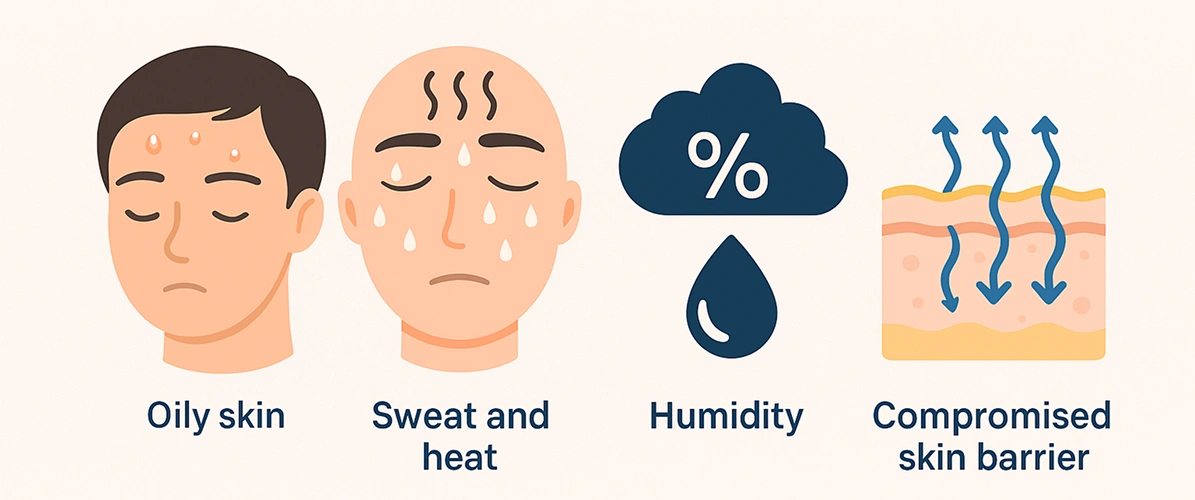
Anyone can develop fungal acne, but certain factors increase the risk. People with naturally oily skin, those who sweat heavily, live in humid climates, or frequently wear hats or helmets are more susceptible. Additionally, people who use heavy or occlusive skincare and hair products, or who have compromised skin barriers, may create conditions favorable for yeast overgrowth. Immune-compromised individuals or those taking antibiotics that disrupt skin bacteria balance may also experience fungal acne flare-ups.
Symptoms and Causes of Fungal Acne on the Forehead
What Causes Fungal Acne?
At the root, fungal acne results from an imbalance in the skin’s natural microbiome. Malassezia yeast, which normally lives harmlessly on the skin, begins to overgrow when there is excess sebum and sweat, creating an oily, moist environment. This leads to inflammation of hair follicles, causing small pustules to form.
Key factors that contribute include:
- Excess oil production often due to hormonal fluctuations or oily skin types.
- Sweat buildup, especially if the skin is not cleansed promptly after sweating.
- Wearing hats, helmets, or headbands that trap heat and moisture on the forehead. Use of heavy or comedogenic (pore-clogging) skincare or hair products, such as thick creams, oils, or hair pomades. Hot, humid climates that promote yeast growth.
- Antibiotic use, which kills beneficial bacteria allowing yeast to dominate.
- Compromised skin barrier from over-exfoliation or harsh cleansers.
Because fungal acne mimics regular acne in many ways, it’s often misdiagnosed, leading to prolonged discomfort and ineffective treatment.
What Are the Symptoms of Fungal Acne on the Forehead?
Fungal acne presents as small, itchy, red or skin-colored bumps that appear in tight clusters. These bumps tend to look very similar (monomorphic) and do not form blackheads or whiteheads like bacterial acne. The itchiness is a hallmark symptom that helps differentiate fungal acne.
Unlike bacterial acne, fungal acne doesn’t typically cause large cysts or nodules. It’s also more persistent and may worsen with common acne treatments, which is a red flag for misdiagnosis.
How Is Fungal Acne Diagnosed?
Since fungal acne resembles bacterial acne, diagnosis based on appearance alone can be tricky. Dermatologists use several methods to confirm fungal acne:
- Skin scraping and microscopic examination: A sample of the affected skin is taken and examined under a microscope to detect Malassezia yeast cells.
- Fungal culture tests: The yeast is grown in a lab to confirm diagnosis.
- Response to antifungal treatment: Sometimes, diagnosis is confirmed by the skin’s improvement after a course of antifungal medication.
If your acne doesn’t improve with typical acne treatments or worsens, it’s important to consult a dermatologist for proper testing.
How to Get Rid of Fungal Acne on Your Forehead
Treating fungal acne requires a targeted approach focusing on reducing Malassezia yeast and restoring a healthy skin environment. Here’s a step-by-step guide:
1. Use an Antifungal Cleanser
An antifungal cleanser with ingredients like ketoconazole or zinc pyrithione helps reduce yeast on the skin. These cleansers should be used daily on affected areas to prevent yeast buildup. For example, shampoos designed for dandruff containing ketoconazole can be used as facial washes if tolerated.
2. Apply Topical Antifungal Treatments
Topical creams or gels containing miconazole, clotrimazole, or terbinafine can directly reduce yeast overgrowth on the skin. Apply these as prescribed by your dermatologist, usually once or twice daily.
3. Adjust Your Skincare Products
Switch to lightweight, non-comedogenic moisturizers and sunscreens that do not trap oils or yeast on the skin. Avoid heavy creams, oils (like coconut oil), and products with fatty alcohols or esters that can worsen fungal acne.
4. Maintain Proper Hygiene
Shower or wash your face promptly after sweating, such as after workouts. Sweat left on the skin creates a breeding ground for yeast.
5. Exfoliate Gently and Regularly
Use a gentle exfoliant like salicylic acid once or twice a week. Salicylic acid helps remove excess sebum and dead skin cells that clog pores and feed yeast.
Natural Ways to Help Manage Fungal Acne
Several natural remedies possess mild antifungal and soothing properties and can complement medical treatments:
- Tea Tree Oil: Known for antifungal and anti-inflammatory effects. Dilute before applying to avoid irritation.
- Apple Cider Vinegar: Helps balance skin pH and mildly inhibits yeast growth when used diluted as a toner.
- Aloe Vera Gel: Soothes irritation and reduces redness; best applied before moisturizer.
While helpful, natural remedies should never replace prescribed antifungal treatments, especially for moderate to severe fungal acne.
Common Mistakes to Avoid When Treating Fungal Acne
Mistakes in managing fungal acne can worsen the condition or delay recovery. Avoid:
- Using benzoyl peroxide or antibiotics aimed at bacteria; these do not kill yeast and may upset the skin microbiome.
- Applying heavy oils or occlusive creams that trap moisture and feed yeast.
- Ignoring persistent itchiness which often indicates fungal involvement rather than bacterial acne.
- Over-exfoliating or using harsh scrubs that damage the skin barrier.
When to See a Dermatologist for Fungal Acne
If fungal acne persists for more than 3-4 weeks despite home treatment, or if the condition worsens, it’s time to see a dermatologist. They may prescribe:
- Oral antifungal medications like fluconazole or itraconazole for more severe cases.
- Prescription-strength topical antifungals or combination therapies.
- Diagnostic testing to rule out other skin conditions.
Misdiagnosis is common, so professional evaluation ensures appropriate care.
Medical Conditions That Can Trigger or Worsen Fungal Acne
Some medical conditions that cause acne by influencing the skin’s microbiome:
- Diabetes: High blood sugar encourages yeast growth.
- Polycystic Ovary Syndrome (PCOS): Causes oily skin and hormonal imbalances that can worsen fungal acne.
- Immune system disorders: Weakened immunity allows yeast to proliferate unchecked.
- Antibiotic use: Kills bacteria but leaves fungal yeast unchecked.
If you have these conditions, managing your overall health can help control fungal acne.
How to Prevent Fungal Acne from Coming Back
Long-term prevention focuses on maintaining a healthy skin environment:
- Use antifungal shampoos twice a week, especially if prone to dandruff or oily scalp.
- Avoid heavy, occlusive creams and hair oils near the forehead.
- Stick to gel-based, lightweight moisturizers.
- Wash pillowcases and hats regularly to prevent yeast buildup.
- Cleanse skin gently but thoroughly after sweating.
Developing a consistent skincare routine tailored to fungal acne-prone skin is key to preventing flare-ups.
Living with Fungal Acne: Tips for Relief and Confidence
Dealing with fungal acne can affect confidence and comfort. Along with treatment, gentle skin care and patience are crucial. Avoid scratching itchy bumps, as this can lead to scarring or dark spots. Use soothing products like aloe vera and maintain good hygiene. Remember, fungal acne can take weeks to clear, so consistency is vital.
How Our Skincare Clinic Can Help You
At Prime Aesthetics, we understand the challenges of fungal acne and offer personalized treatments tailored to your skin’s needs. Our advanced consultations ensure accurate diagnosis and customized care plans. We use medically approved antifungal treatments, targeted facials, and gentle skincare regimens designed for fungal acne-prone skin. Whether you need topical solutions or advanced therapies like HydraFacials and specialized serums, we’re here to support your journey to clear, healthy skin.
Final Thoughts
Fungal acne on the forehead is a unique skin condition requiring targeted treatment and care. By understanding its causes, symptoms, and proper management, you can effectively reduce flare-ups and maintain a clearer complexion. Remember, consistency in skincare and early intervention are your best tools against fungal acne. If in doubt, consult a dermatologist to get the right diagnosis and treatment plan tailored for you.
If you’re ready to improve your Treatment, our expert team is here to help.
Contact us today to book your consultation and take the first step toward clearer, smoother, and more radiant skin.